Health care practitioners universally recognize the World Health Organization targets for physical activity and exercise. Yet, how should this exercise be applied to those having stoma surgery? This EXPASS case study describes the new exercise and physical activity (before and) after stoma surgery, developed by an expert panel through the Association of Stoma Care Nurses UK.
Clinical exercise physiologist and author Sarah Russell explains the importance of the new exercise and physical activity after stoma surgery (EXPASS) best practice recommendations, published by ASCN UK.
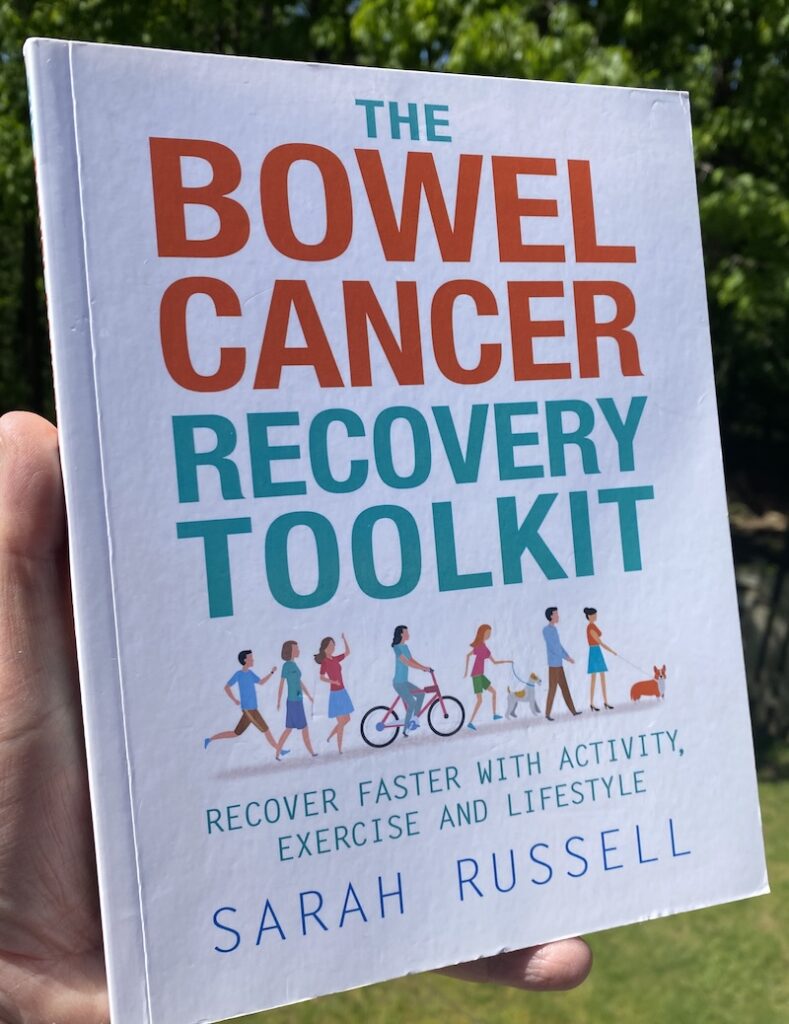
The Bowel Cancer Recovery Toolkit to EXPASS
Some context as to how this project came about is pertinent. In Opencity Inc’s previous project on the Assessment, Prevention and Management of Parastomal Hernia on behalf of NSWOCC, physical activity was identified as a central tenet of rehabilitation. Yet, there was little quality literature to support it. This led us to Sarah Russell, who had authored The Bowel Cancer Recovery Toolkit: Recover Faster with Activity, Exercise and Lifestyle, published in 2019. Sarah Russell and Kerry Archer presented at the ASCN UK annual conference on the need for guidelines for exercise/physical activity.
Overall, the development of these EXPASS best practice recommendations further elevated the credibility of the field. Sarah Russell, with support from Convatec, deserves recognition. Yet, publishing this EXPASS work through an interprofessional expert panel, including people with lived experience through ASCN UK and supported by seven industry members, carries far greater authority. Peer-reviewed journal articles on EXPASS and conference posters also mean that the work becomes indexed and cited further.
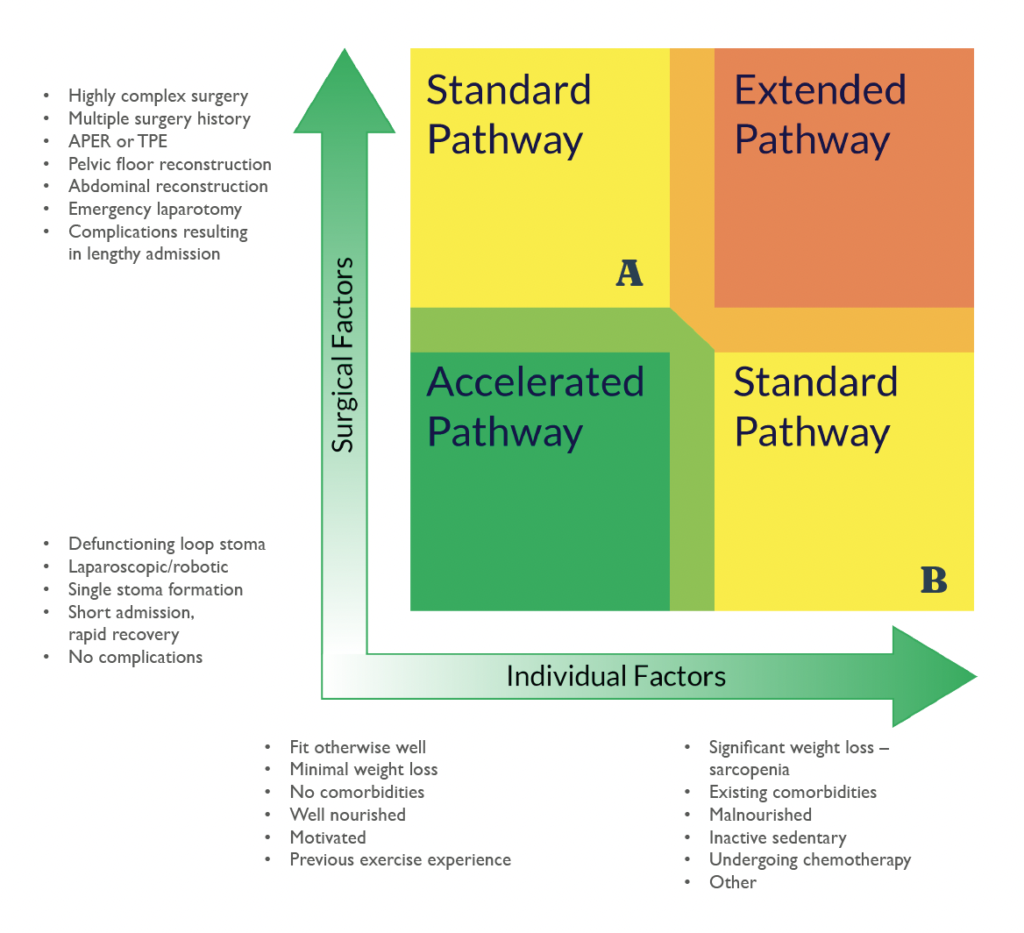
The origin of what became the EXPASS matrix dates back to the Me+ program, developed by Sarah Russell in conjunction with Convatec. But could the expert panel further develop that individualized rehabilitation framework? More than. Not only did the EXPASS matrix below advance the concept, but three EXPASS pathways were developed to provide practice enablers to aid knowledge translation. The three EXPASS pathways are:
- Core exercise recommendations
- Daily activities and occupation recommendations
- Intentional physical activity and exercise recommendations
A break from convention
There were many aspects of this project that diverged in significant ways from all those previously described in our case studies.
Expert panel meeting–traditionally, task force (expert panel) meetings have taken place monthly, with adjustments around Christmas, summer, conference periods, or more frequently during the Delphi rounds. In contrast, in this project, the engagement of the expert panel varied much more, with individuals or groups working on specific projects and related tasks, then only coming back together at more strategic stages. There is no right or wrong, just an observation that it was different.
Journal article submissions–traditionally, development of manuscripts for submission to a peer-reviewed journal follows after completion of the project. In contrast, one journal article was submitted and published early in the project, and a second was drafted with a summary of the scoping review. The original article was published in the British Journal of Nursing in April 2024, authored by Sarah Russell, Kerry Archer, and Wendy Osborne. The second article summarizing the scoping review would have created copyright issues with the subsequent publication of EXPASS, and so a decision was taken to withdraw the submission.
Logo development–traditionally, the only logos presented are those of the partnering organizations and with recognition to sponsors. In contrast, the development of a logo for project … which became EXPASS, became a topic of discussion for the expert panel. Alternative design options were shortlisted and refined. It also meant the document cover featured the logos of both the association developing the project and the project itself.
Document structure–traditionally, the structural flow of the final document follows a table of contents according to APA Publication Manual or similar style guides. In contrast, readers of the EXPASS recommendations will find the literature synthesis in an Appendix. The list of glossary and abbreviations is found at the beginning.
Enabler–traditionally, the enabler has been produced in the later stages of drafting. In contrast, the 2-page EXPASS infographic was developed as artwork early, prior to peer review. In addition, once the EXPASS best-practice recommendations were published, a supplement was developed to further refine the critical tables/figures.
Industry updates–traditionally, we have provided no formal update to any companies who have contributed funding. In contrast, we provided a 1-2 page formal update each quarter. We sought permission from the expert panel to share their names. We did not provide any advance view of the content and did not allow industry members to influence it.
So why highlight these breaks from convention? Because each of the above activities or tasks did or had the potential to distract the expert panel from the primary goal of producing the best practice recommendations. From our perspective, it also increased the project’s workload.
Adoption and Implementation
Sarah Russell and Kerry Archer launched the EXPASS best practice recommendations during their plenary session at the ASCN UK conference in October 2005. Kerry and other members of the expert panel presented posters and conference sessions in the months that followed. By the time of the WCET-NSWOCC Joint Congress in Vancouver in April 2026, there were anecdotal reports from the UK, Canada, and Australia that local health care systems were seeking to integrate the EXPASS work into their care plans.
The recommendations have been endorsed by the following professional bodies:
- Association of Chartered Physiotherapist in Oncology and Palliative Care (ACPOPC)
- Pelvic, Obstetric and Gynaecological Physiotherapy (POPG)
- Chartered Society of Physiotherapists (CSP)
- World Council of Enterostomal Therapists (WCET)
- Nurses Specialized in Wound, Ostomy and Continence Canada (NSWOCC)
- Association of Coloproctology Nurses of Great Britain & Ireland (ACPN)
Sarah Russell and Kerry Archer also produced explainer videos for the ASCN UK website to accompany the document’s launch. Finally, an eight-page supplement was created with further refined versions of the EXPASS matrix and pathways. Like the international advisory board on wound bed preparation, I trust this EXPASS work will prompt long-term collaborations among members of the expert panel.
Thank you to ASCN UK for investing in this project. It would not have been possible without the financial support of AMI Medical Ltd, Clinimed, Coloplast, Convatec, CUI International, Eakin, and Salts. I am excited to see where the seven sponsoring industry members evolve the EXPASS work. The possibilities are endless.
Thank you to my extended Opencity Inc. team involved in this project. They are Dr. Kevin Woo, Lisa Moulton, Layal Bou Abdo, Dee Auger, and Tofajjal Hossain Topu. Thank you all.
The EXPASS work is published under a Creative Commons Licence by ASCN UK.
Reference: Russell S, Archer K, Osborne W. Exercise and physical activity after stoma surgery: EXPASS recommendations. Br J Nurs. 2024;33(6):S20–25. https://doi.org/10.12968/bjon.2024.33.6.S20