Reinventing New Crisp ORNAC Guidelines | Case Study
The ORNAC Guidelines help advance preoperative nursing in Canada. This case study explores the development of the 17th edition.
Reinventing New Crisp ORNAC Guidelines | Case Study
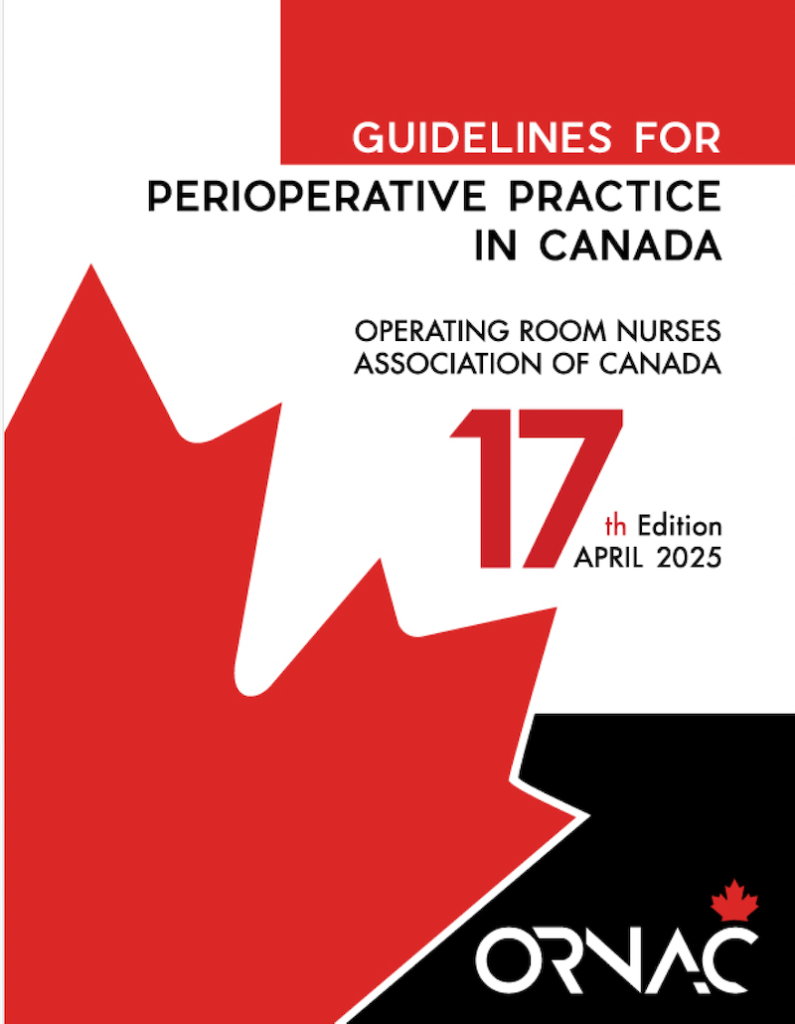
The Operating Room Nurses Association of Canada published the 17th edition of the ORNAC Guidelines, reflecting a crisp new ORNAC brand. This case study examines the two-year project to bring these to fruition simultaneously in English and French.
Let’s start with some stats to put this substantial undertaking into context.
530 pages in English with more in French
970 unique references
159 abbreviations
198 definitions
18 figures and 14 tables
19 colour pages, plus the cover.
The ORNAC Guidelines for Perioperative Practice in Canada serve as a reference and guide for perioperative nurses, health care facilities caring for surgical patients, professional associations, and other organizations involved in surgical services. These guidelines represent recommended practices based on the best available evidence to help perioperative nurses deliver optimal patient care in the perioperative setting. Considering the diverse practice areas and roles across the country, the ORNAC Guidelines are an important tool in the clinical decision-making process. – ORNAC website
The scale of these ORNAC Guidelines, published every 2 years, necessitates a substantial team effort.
9 committee members with 2 mentors
3 contributors plus five Board members
15 English reviewers and 4 French reviewers
3 subject matter experts, plus advice from many others
A support team, including a project manager, researcher, editor, graphic designer, and translator.
Part of that team effort involved close partnerships with CSA Group. A portal and the support of Olivia Croxall, Project Manager, Health and Safety at CSA Group, were substantial. This collaboration ensured that all references in the Guidelines to CSA Group documents were to the latest active versions.
Continual quality improvement
The ORNAC Guidelines (formerly ORNAC Standards) is an example of continuous improvements in the process methodology from one edition to the next. An undertaking that is fulfilling and motivating to take something apart, reconfigure it, and put it back together. We described here the publication of the ORNAC Standards 16th edition. There was less room for further quality improvement in the editing of the document itself, so the focus examined ways to improve the process methodology, update the look of the finished documents, and address older textbook references.
Our own skills have also improved through work on these projects. Most often in the absolute fundamentals of project management. The fabulous editor Lisa Moulton and I have been exchanging emails almost daily for two years. Simply asking for and acknowledging receipt of an email or file attachment makes it 100% clear who owns a specific file and the next steps. This is now a convention adopted for peer review and projects far behind ORNAC. I will send reminder emails to confirm receipt of emails and attachments. Here are Lisa’s reflections on the work:
“Having been engaged to finish up the 14th edition, it was a pleasure to work with the Guidelines Committee and the Project Manager, John Gregory, on the 15th – 17th editions as editor. With many returning volunteers, we became a well-oiled machine that biennially made major and needed changes to the Guidelines to maintain their relevance and currency for operating room nurses. In addition to new and updated content in the 17th edition, changes included standardizing terminology and updating references to the most recent textbooks, CSA Group standards, and CCOHS fact sheets. Furthermore, major changes were made to the Definition section by expanding the content by 66%, adding related terms to assist the reader, and indicating if the term is defined in the text of the Guidelines.” – Lisa Moulton, Editor of the 15th – 17th editions.
For the 17th edition, we again elevated the quality and extent of the original briefing/orientation of committee members, including the use of short video explainers. A year into the cycle, we did a similar exercise with the English peer reviewers. For this 17th edition, as project manager, I also undertook to do the sme and project manage the French reviewers. In this way, it was clear to English and French reviewers what they were being asked to do, how they should do it, and the deadline for return. (The role of the French reviewers was to review the accuracy of the French translation rather than the content.)
The record of changes was introduced as part of the front matter. The two and a half pages of the record of changes (general and listed by section) reflect both the extent of the revisions and Lisa’s attention to detail.
In defining the scope of work for the 17th edition, the committee set an aspiration to review all references attributed to medical textbooks. In some cases, newer versions of the textbooks had been published. These specifically relate to:
Nagelhout et al., 2013 to Elisha et al., 2023;
Phillips, 2017 to Phillips & Hornacky, 2021;
Potter et al., 2013 and Potter et al., 2018, to the 7th edition published in 2024. It is cited in accordance with APA 7th edition by the authors of the edited chapters; and
Note. If not supported by the most recent edition, the reference was deleted from the text.
The goal was to ensure, where possible, that references were less than 10 years old. It became apparent that this was a colossal undertaking. For the 18h edition, for example, there are 526 citations to Phillips & Hornacky, 2021, now replaced by Hornacky & Phillips, 2024.
Section 6 was removed and replaced with a separate, standalone set of expanded Definitions and Abbreviations. Previous content listing organizations was moved to the ORNAC website.
ORNAC rebrand
The ORNAC Board of Directors invested tremendous time in refreshing the ORNAC brand. The logo is just one manifestation of that updated brand position. Elham Araboff from Lines and Beyond provided the concept design and logo development. She also supported the board in developing a new Model for Canadian Perioperative Nursing Practice and in designing the front cover. I have worked with Eli before other Opencity Inc client projects and was delighted to recommend her to ORNAC. Members of the ORNAC Board also worked on the content descriptions of ORNAC, which moved from the front matter into Section 1. Finally, the board sought legal expertise to produce a new copyright notice and disclaimer. Eli elaborates here:
“With the ORNAC Guidelines 17th edition, the challenge was to bring structure and clarity to a dense, highly detailed body of perioperative knowledge, without compromising its authority. The brand system was designed to support navigation, hierarchy, and precision at scale, enabling healthcare professionals to engage with the content more efficiently and confidently. Rather than adding visual noise, the approach was deliberately restrained and systematic, reinforcing ORNAC’s role as a trusted national standard while improving how the guidelines are used in real clinical environments.” – Elham Araboff.
And perhaps such a small, almost insignificant change was the addition of a black-and-white back cover. Documents are often placed face down in workplaces. The new back cover is both helpful to users of the guidelines and reinforces the ORNAC brand.
The launch of the new ORNAC brand went far beyond the guidelines to ensure a simultaneous launch of the new ORNAC website. Before the final ORAC Board approval, we provided a table showing that copyright permission had been obtained for each of the 19 figures and 14 tables.
Lessons from the ORNAC Guidelines 17th edition
Were the 17th edition guidelines perfect? No, yet getting closer.
As noted already, we were overly ambitious in reviewing all references older than 10 years and nursing textbooks
On reflection, would it have been less overwhelming for the Guidelines Committee to provide smaller sections for review, or to divide them to make them less daunting?
How could we ensure the same level of linguistic consistency in the French guidelines as the English version?
Would it have been more efficient to engage the editor earlier in the development of content, such as the covers, perioperative nursing model, and boilerplate text? – There is an argument that the board finalization and translation of these components ultimately cost more money and took more time in the long run because there was a lack of grammatical consistency between different things done by different people at different times.
These lessons and philosophical self-reflection drive and motivate us to improve both the process and the quality of the respective editions.
It was a pleasure working with the Guidelines Committee, Board, Kevin Woo, Lisa Moulton, Eli Araboff and a whole array of reviewers, experts, and partner organizations. We are all proud to finish the latest edition on time and on budget.