
The increasing cancer survival rates equate to a greater need for nursing support of malignant cutaneous wounds. This case study explores the development and publication of the Nurses Specialized in Wound, Ostomy and Continence Canada in partnership with the Canadian Palliative Care Nursing Association.
“Malignant cutaneous wounds present complex physical and psychosocial challenges, often with limited high-quality evidence and little standardized guidance to support clinicians. This project was important in addressing a recognized gap in care by developing national, evidence-informed recommendations. With increasing cancer survival and prevalence of these wounds, there is a critical need to support consistent, person-centred care that prioritizes symptom management, dignity, and quality of life for individuals and their support persons. This work aimed to provide practical, evidence-informed guidance to support clinicians in delivering consistent, high-quality care across settings. The recommendations are intended to improve symptom management, enhance quality of life, and support a holistic, interprofessional approach to care. By publishing in both English and French, and through dissemination in JWOCN, we hoped to increase accessibility, promote national uptake, and encourage further research in an area where evidence remains limited.” – Debra Johnston, MN, BScN, RN, NSWOC, WOCC(C).
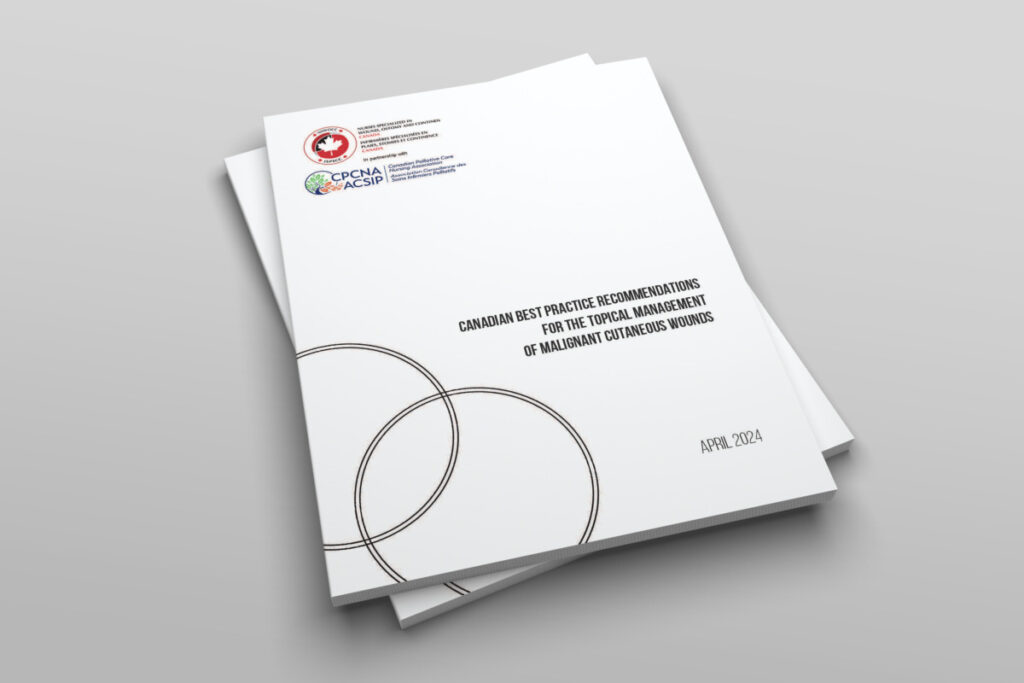
23 Best Practice Recommendations
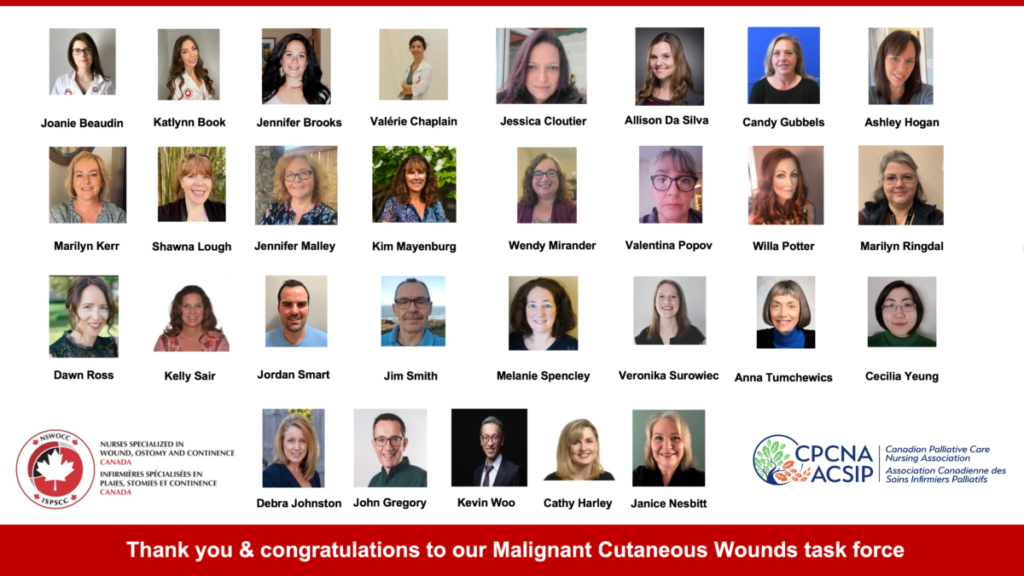
The task force of 29 members drafted recommendations, which were subjected to three rounds of Delphi consensus with a preagreed consensus level of 80%. The resulting twenty-three recommendations for a second Delphi round achieved consensus levels of 93% or higher. The document and recommendation covered the following areas:
- Assessment
- Goals of Care / Care Planning
- Health Systems Approach
- Education
- Pain and Symptom Management
- Topical Management
- Bleeding
- Malodour
- Moisture Management
- Evaluation and Research
The order of the sections and recommendations changed many times through the project. Each section concluded with clinical pearls and some with enablers for practice. As we explored the retrieved literature it become readily apparent that the health system itself played a pivotal role in malignant cutaneous wounds. As noted it has a profound impact on the person living with a malignant cutaneous wounds, their support person(s) circle and the health care professionals team supporting them. There are three specific recommendations listed. Several papers emphasized the need for mental health support for health care professionals working in this field. And that is a health care organizational human resources issue which needs to come from executive leadership.
Interestingly, the peer review process highlighted that cultural humility would be a more appropriate term than cultural safety. In an unanticipated step, we went back out to Delphi on the adjusted term in a single recommendation. The new Recommendation 7 reads
Practice cultural humility when providing care for the person with the malignant cutaneous wound and their support persons—that respects their values and beliefs and is free of racism and discrimination—with the intention of building trust and supporting culturally safe care.
Members of the task force supplied photographs to help illustrate the accompanying rationale/explanations. Ownership of them was transferred to NSWOCC, so that it is now the rights holder of the full document. The only exception is the assessment tools in the appendices, which were reproduced with permission.
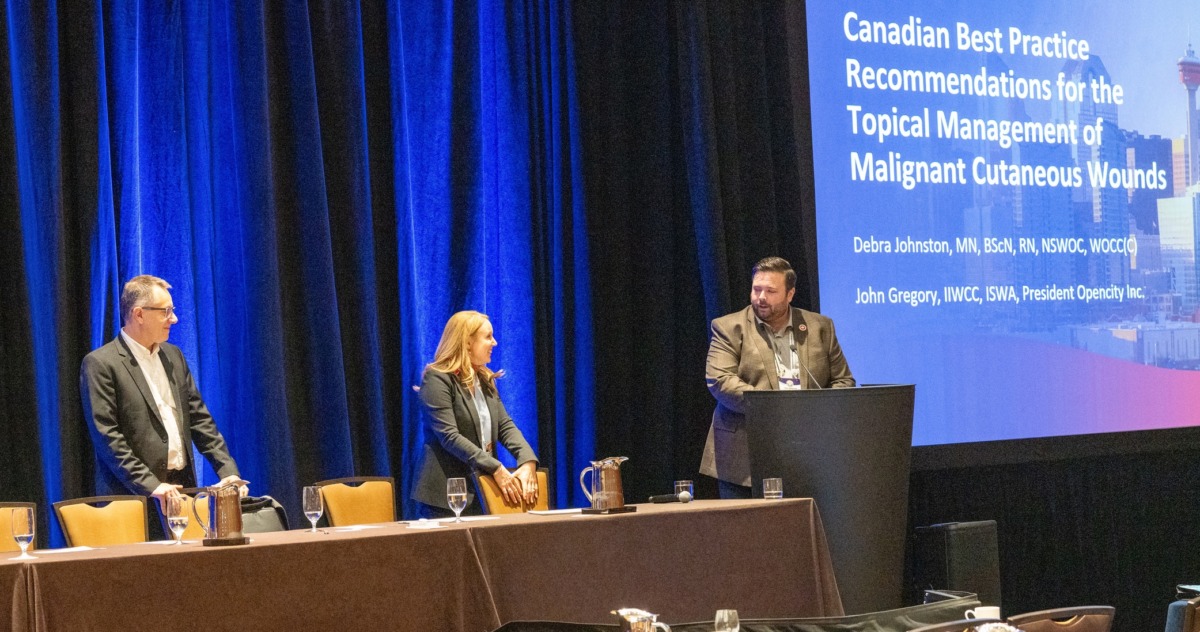
As described in case studies about the previous projects led by Debra Johnston, NSWOC Standards 3rd edition, urinary diversions position statement, she has a unique ability to create a team culture. She leads by example and instills a strong sense of community and shared decision making. She is decisive when needed to advance critical steps and bring a project to a conclusion. I had the pleasure of launching the best practice recommendations at the NSWOCC 43rd National Conference in Calgary (May 1-5, 2024) conference session with Debra Johnston.
One critical element we included throughout the document is specific interventions for the mental health and well-being of everyone. We can appreciate the profound emotional, psychosocial and psychological impact these wounds have for person; as well as everyone within their circle of care. Malignant cutaneous wounds represented a new therapy field for me. Learning about new areas of nursing practice and gaining a perspective on the patient-centred concerns is a fascinating byproduct of these projects. The best practice recommendation sought to reflect the patient experience, deepen our cultural humility, and recognize the impact that managing malignant wounds can have on the interprofessional team.
“John Gregory (Opencity Inc.) played a key role as technical writer and project manager, supporting the organization, editing, and production of the final document. His contributions ensured the recommendations were clearly structured and cohesive. This support was instrumental in translating the task force’s work into a polished, professional resource suitable for national dissemination and publication.” – Debra Johnston, MN, BScN, RN, NSWOC, WOCC(C).
Recommandations canadiennes des pratiques exemplaires pour la prise en charge topique des plaies malignes
Valérie Chaplain, BSc. Inf, ISPSC, PSCC(C) took the final English artwork file and translated it into French. Our editor, Lisa Moulton, transposed the references.
Peer review publication
Publishing new consensus evidence is only a first step and should not be regarded as the project’s completion. Efforts to disseminate the information and encourage local health system organizational adoption are the true goal and measure of success. In future work, the development of a submission to respected peer reviewed journals should become a component of the project deliverables. This can ensure the timely development of the manuscript and submission. Typically, not all members of the task force are involved, but a specific group of those most interested in contributing to the manuscript publication.
A big thank you to Mölynlycke Health Care in Canada for supporting this project with an unrestricted educational grant supporting both the original task force publication and subsequent translation into French. Also to CPCNA, Valerie N. Schulz, MD, FRCP(C), MPH, CPC(HC), kindly assisted with the inclusion of the Malignant Wound Assessment Tool–Clinical (MWAT-C), and our 40 peer reviewers. The peer review process also prompted us to engage some subject matter experts on pharmaceutical preparations. Further reiterating the role of the pharmacists as an important member of the interprofessional team. Dr. Kevin Woo and his team at Queen’s University supported the literature search and article retrieval. Thanks again to my Opencity Inc team, editor Lisa Moulton, clincial nurse researcher Lisa Bou Abdo, graphic designer Natasha Wilson. I couldn’t successfully these publications without you.
References
- Johnston D, Chaplain V, Kerr M, Malley J, Popov V, Ross D, Smart J. Executive Summary: Topical Management of Malignant Cutaneous Wounds: Canadian Best Practice Recommendations for Health Care Professionals Developed by Nurses Specialized in Wound, Ostomy and Continence Canada (in collaboration with the Canadian Palliative Care Nursing Association). Journal of Wound Ostomy & Continence Nursing. 2024 Nov 1;51(6):463-9. https://doi.org/10.1097/WON.0000000000001130
- Nurses Specialized in Wound, Ostomy and Continence Canada and Canadian Palliative Care Nursing Association. Canadian best practice recommendations for the topical management of malignant cutaneous wounds. Nurses Specialized in Wound, Ostomy and Continence Canada; 2024 Apr. 92 p. Available from: https://nswoc.ca/bpr